Raw Honey vs Processed Honey: Which One Should You Choose?
Walk down any grocery aisle and you will find a wall of honey jars. Some are golden and glass-clear. Others are cloudy, thick and a little rough around the edges. Some say “raw,” some say “pure,” some say “natural,” and some say nothing at all. If you have ever stood there wondering what the difference really is, you are in good company.
Honey is one of the oldest foods people have eaten, and for good reason. It is naturally sweet, versatile, and has been valued in kitchens and home remedies for thousands of years. But the honey in your pantry today may have taken a very different journey from the honey a beekeeper pulls straight from the hive. Understanding raw honey vs processed honey helps you spend your money wisely, protect your family’s health, and enjoy honey the way it was meant to taste.
In this guide, we break down exactly how each type is made, how they compare in nutrition, taste and texture, how to spot genuine honey, and who should choose what. By the end, you will be able to read a honey label like an expert and pick the jar that truly suits your needs.
Raw Honey vs Processed Honey: What Is the Difference?
Before comparing raw honey vs processed honey in detail, it helps to define each one clearly. The words on honey labels are not always used consistently, so let’s start with simple, practical definitions.
What Is Raw Honey?
Raw honey is honey in its most natural state. It is extracted from the honeycomb and then lightly strained, usually through a coarse mesh, just enough to remove larger bits of wax and bee parts. It is not heated to high temperatures and it is not ultra-filtered. Because of this gentle handling, raw honey retains tiny particles of pollen, propolis, beeswax and natural enzymes that are present in the hive.
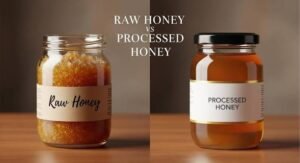
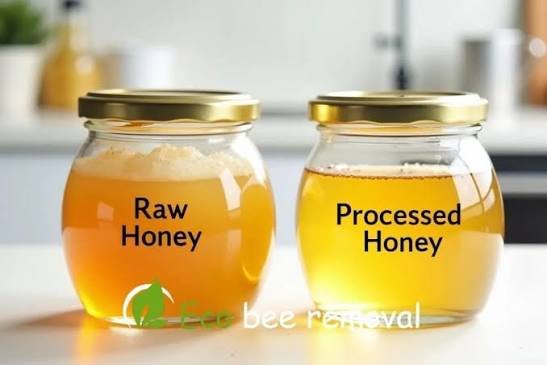
You can often recognise raw honey by its look and feel. It tends to be thicker, a little cloudy, and may crystallise (turn grainy or solid) over time. This is completely normal and is actually a sign that the honey has not been heavily altered. Raw honey is also called unfiltered or unheated honey in many places, though these terms are not identical in every country.
What Is Processed Honey?
Processed honey is honey that has been heated, filtered, or both, usually on a large industrial scale. The most common steps are pasteurisation (heating the honey to destroy yeast and delay crystallisation) and fine filtration (pushing honey through very tight filters to remove pollen, tiny air bubbles and particles).
The result is a clear, smooth, uniform liquid that stays runny on the shelf for a long time. That consistency is exactly what many manufacturers and consumers want. But the same steps that make honey look flawless can also strip away some of the natural compounds that make it special.
Raw Honey vs Processed Honey: Where Do “Pure,” “Natural” and “Organic” Fit In?
These words are often confused with “raw.” Here is a quick way to think about them:
- Raw tells you about how the honey was handled after harvest (minimal heat, minimal filtering).
- Pure means nothing else has been added, such as sugar syrup or glucose. Pure honey can still be processed.
- Organic tells you about how and where the bees foraged and how the apiary is managed, with no synthetic pesticides in the foraging area.
The best choice for most people is honey that is raw, pure, and organic, because it combines honest handling with clean sourcing.
Raw Honey vs Processed Honey: How Each Is Made
The journey from flower to jar is the single biggest reason these two honeys differ. Let’s follow each one step by step.
How Raw Honey Is Made
- Foraging. Bees collect nectar from flowers and carry it back to the hive.
- Transformation. Inside the hive, worker bees pass the nectar between them, adding natural enzymes, and fan it with their wings until most of the water evaporates.
- Capping. Once the honey is ripe, bees seal each honeycomb cell with a thin wax cap.
- Harvesting. The beekeeper removes the frames, uncaps the wax, and spins the frames in an extractor so the honey flows out.
- Light straining. The honey passes through a mesh to remove large debris, and it is then packed.
At no point is the honey cooked, bleached or chemically treated. What you get is a fresh, wholesome product that closely reflects what the bees made.
How Processed Honey Is Made
Processed honey starts in the same way, but then moves into a factory-style routine:
- Heating. Honey is warmed, often to 65–77°C or more, so it flows quickly through pipes and filters.
- Ultra-filtration. Honey is forced through fine filters that remove pollen and other microscopic particles.
- Pasteurisation. The honey is heated to kill yeast cells and to slow down crystallisation.
- Blending. Honey from different sources is often mixed to produce a consistent colour and taste across batches.
- Packing. The finished honey is bottled while still warm.
Each step has a purpose from a manufacturing point of view: longer shelf life, a clear look and easier handling. The trade-off is that heat and fine filtration can reduce delicate enzymes, aroma compounds and plant-based nutrients.
Why Pollen Matters in Raw Honey vs Processed Honey
Pollen is one of the quiet heroes of raw honey, and it is a major point in the raw honey vs processed honey comparison. Besides adding trace nutrients, pollen acts like a fingerprint. Scientists and food authorities can analyse it to work out where honey came from and which flowers the bees visited. When honey is ultra-filtered, that fingerprint disappears, which makes it harder to trace the honey’s origin. This is one reason many conscious shoppers lean towards raw, traceable honey.
Raw Honey vs Processed Honey: Nutrition and Health Compared
Honey is, at heart, a natural sweetener. It is made mostly of sugars (fructose and glucose) and water, and it should be enjoyed in moderation like any sweet food. That said, the quality of that honey can make a difference in what else comes along with the sweetness.
What Raw Honey Naturally Contains
Because it is minimally handled, raw honey is generally richer in the following:
- Natural enzymes, such as invertase and glucose oxidase, added by bees during honey-making.
- Antioxidants, including flavonoids and phenolic acids, which come from the plants bees forage on.
- Trace minerals and vitamins, such as small amounts of potassium, calcium, magnesium and B vitamins.
- Pollen and propolis fragments, which carry additional plant compounds.
Research has linked honey’s antioxidant compounds to a range of potential benefits. For a deeper look at the science, you can read more about the It is worth remembering that honey is a food, not a medicine, and results vary from person to person.
Processed Honey vs Raw Honey: What Gets Lost in Processing
High heat and fine filtration can reduce the activity of heat-sensitive enzymes and remove pollen and propolis particles. Some studies have found that heating honey can lower its antioxidant levels and change its flavour, though the extent depends on the temperature and how long the honey is heated.
That does not mean processed honey is “bad” or unsafe. It is still a sweetener that provides energy and can be used in cooking and beverages. It simply tends to be a simpler product, with fewer of the extras that make raw honey so appealing.
Raw Honey Benefits People Commonly Enjoy
Many families reach for raw honey as part of their everyday routine. Some of the commonly reported benefits include:
- A soothing spoonful for a scratchy throat. Honey’s thick texture coats the throat, and it has been a traditional comfort for coughs for generations.
- A better alternative to refined sugar. Honey brings flavour and trace nutrients that plain white sugar does not have, and you often need less of it for the same sweetness.
- Gentle energy. The natural sugars in honey provide a quick source of energy for workouts or busy mornings.
- Skin and hair care. Thanks to its natural moisture-binding quality, honey is a popular ingredient in DIY masks and scrubs.
- Local-honey lore. Many people believe local raw honey helps with seasonal sensitivities. The scientific evidence on this is mixed, so treat it as a traditional belief rather than a guarantee.
The Sugar Question
Whether raw or processed, honey is still sugar. Both types contain similar amounts of calories and carbohydrates per spoonful. If you are managing blood sugar, weight or a medical condition, speak with your doctor or dietitian about how much honey is right for you. Choosing raw honey does not mean you can use it freely, but it does mean you are choosing a more natural, less altered sweetener.
Raw Honey vs Processed Honey: Taste, Texture and Crystallisation
Anyone who has tasted both will tell you they are not the same experience. The differences go well beyond the label.
Flavour and Aroma
Raw honey has a rich, layered taste. Depending on the flowers the bees visited, you may notice floral, fruity, woody, or even slightly herbal notes. Wildflower honey tastes different from mustard honey, and both taste different from jamun or eucalyptus honey. Each harvest can be a little different, which is part of the charm.
Processed honey, especially blended commercial honey, tends to taste mild and uniform. Heating can dull the delicate aromas, and blending evens out the unique character of individual harvests. If you prefer a very mild, consistent sweetness, processed honey can suit you. If you love real flavour, raw honey is hard to beat.
Colour and Texture
- Raw honey: slightly cloudy or opaque, thick, sometimes with tiny specks of pollen or wax.
- Processed honey: bright, clear, and flowing, often more watery in texture.
Raw Honey vs Processed Honey Crystallisation: A Sign of Real Honey, Not a Flaw
Here is something many people misunderstand. When honey turns thick, grainy, or solid in the jar, they assume it has gone bad. In reality, crystallisation is a natural process caused by glucose separating from water. Raw honey crystallises faster because it still contains pollen particles that act as seeds for crystals to form.
Crystallised honey is perfectly safe to eat. If you prefer it runny, place the sealed jar in a bowl of warm (not boiling) water for 15–20 minutes and stir gently. Avoid microwaving or overheating, since high heat will damage the very qualities you chose raw honey for.
Processed honey resists crystallisation because the heating step dissolves the sugar crystals and filtration removes the seed particles. That is why it can stay clear for months, and it is also why some shoppers wrongly believe clear honey must be “better.”
Raw Honey vs Processed Honey: How to Choose the Right Jar
Now that you understand the raw honey vs processed honey differences, how do you actually pick a good jar? The honey market has its share of confusing labels and, unfortunately, adulterated products mixed with sugar syrups. Here is how to shop smartly.
Read the Label Carefully When Comparing Raw Honey vs Processed Honey
Look for these signals when comparing raw honey vs processed honey on the shelf:
- “Raw,” “unheated” or “unfiltered” on the front or back label.
- A single-ingredient list. The only ingredient should be honey. If you see syrup, glucose, fructose or “sweeteners,” put it back.
- Floral or regional source. Honest producers usually mention the type of flowers or the region.
- Batch number and packing date. This shows traceability and freshness.
- Food safety licence. In India, look for a valid FSSAI licence number on the pack.
- Organic certification, if you want assurance about clean sourcing.
Simple Home Checks (With a Word of Caution)
You may have seen kitchen “tests” for honey purity, such as the water-glass test, the thumb test, or the flame test. These can be fun and give a rough idea, but none of them is fully reliable. Many well-made processed honeys pass them, and some perfectly genuine raw honeys behave unexpectedly depending on moisture and sugar content. Think of them as hints, not proof.
The most dependable proof of purity is laboratory testing. Reputable brands test their honey for adulteration, moisture content and contaminants, and are open about it. When buying online, choose sellers who share lab reports or certifications.
Watch Out for These Red Flags
- A price that is far lower than typical market rates. Real honey is costly to produce.
- Honey that is extremely clear, very runny, and never crystallises, with no mention of how it was processed.
- Vague labels that use words like “natural” or “pure” without any detail about source or handling.
- No information about the producer, location or batch.
Why Trust and Transparency Matter
Honey travels a long way from hive to home, and it is hard to judge quality by eye alone. That is why it makes sense to buy from brands that work directly with farmers and beekeepers, are open about sourcing, and handle honey gently. At Naturvia Organics, we believe you should know where your food comes from. Explore our farm-fresh range of pure, chemical-free honey at [INTERNAL LINK: Naturvia Organics honey category page].
Raw Honey vs Processed Honey: Who Should Choose Which?
There is no single “right” answer in the raw honey vs processed honey debate. The better choice depends on your priorities, your household and how you plan to use the honey.
Choose Raw Honey If You…
- Want the most natural, minimally handled sweetener available.
- Enjoy rich, distinctive flavours and don’t mind a thicker texture.
- Care about traceability, sustainability and supporting responsible beekeeping.
- Use honey mainly as a spread, in warm (not hot) drinks, in dressings, over fruit, yogurt or oats.
- Want to replace refined sugar with something wholesome and nutrient-rich.
Choose Processed Honey If You…
- Prefer a very mild flavour and a clear, runny texture.
- Need honey that stays liquid and pours easily for bulk cooking or baking.
- Are buying primarily for convenience and budget, and are not particularly concerned about enzymes or pollen.
If you do go with processed honey, still check that it is pure and free of added sugars.
Special Notes on Safety
- Never give honey to babies under 12 months old. Both raw and processed honey can carry bacterial spores that may cause infant botulism, a rare but serious illness. This rule applies to all honey, no exceptions.
- People with pollen or bee allergies should speak to a doctor before trying raw honey, since it contains traces of pollen and bee products.
- People with diabetes should treat honey as a sugar source and consult their healthcare provider about portions.
- Pregnant women and those with specific health conditions should check with their doctor before making honey a regular habit.
Getting the Most from Your Raw Honey
A few simple habits will help you enjoy raw honey at its best:
- Stir it into warm, not boiling, drinks. Let your tea or water cool for a few minutes first, so heat does not destroy the delicate compounds you paid for.
- Store it in a cool, dry place in a tightly sealed glass jar, away from direct sunlight and moisture.
- Use a clean, dry spoon each time to avoid introducing water or bacteria.
- Skip the refrigerator. Cold storage speeds up crystallisation and offers no benefit.
- Embrace the crystals. If your honey thickens, gently warm it in a water bath or simply spread it as it is. It is a sign of a genuine, natural product.
Easy Ways to Add Raw Honey to Your Day
- Drizzle over porridge, oats, yogurt or fresh seasonal fruit.
- Whisk into salad dressings with lemon juice and olive oil.
- Stir into warm turmeric milk or herbal tea once it has cooled slightly.
- Spread on whole-grain toast with nut butter or seeds.
- Use it as a natural sweetener in homemade energy balls and granola bars.
Raw Honey vs Processed Honey: A Simple Verdict
If we had to sum up raw honey vs processed honey in one line: raw honey is closer to nature, and processed honey is closer to convenience.
Raw honey keeps more of its natural enzymes, pollen, antioxidants and character. It tastes richer, can be traced more easily, and fits neatly into a clean, wholesome lifestyle. Processed honey is smoother, clearer and more shelf-stable, but may lose some of its natural goodness along the way.
For most health-conscious families, raw, pure and organic honey is the better choice, provided you buy from a trusted source. And whichever you choose, remember that honey is a treat to be enjoyed in sensible amounts as part of a balanced diet.
FAQs on Raw Honey vs Processed Honey
Is raw honey vs processed honey really a healthier choice?
Raw honey generally retains more of its natural enzymes, pollen and antioxidants because it is not exposed to high heat or fine filtration. This makes it a more nutrient-rich option. However, both types are mainly sugar, so portion size still matters. Raw honey is a better-quality sweetener, not a cure-all.
Why does my raw honey turn hard and grainy?
That is crystallisation, a natural process that happens when glucose separates from the water in honey. Raw honey crystallises faster because it contains pollen, which helps crystals form. It is safe to eat and is actually a good sign. Just warm the sealed jar in a bowl of warm water and stir to return it to a smooth, liquid state.
How can I be sure the honey I buy is pure?
No single kitchen trick is fully reliable. Check that honey is the only ingredient on the label, look for a valid food safety licence and batch details, and choose brands that share lab test results or organic certification. Be wary of unusually cheap honey. Buying from a transparent, trusted brand is the safest approach.
Ready to Taste the Difference?
Now that you know the raw honey vs processed honey difference, the choice is yours. Real honey tells its own story, from the flowers the bees visited to the hands that harvested it. If you are ready to swap refined sugar and overly processed syrups for something truly wholesome, explore the full range of farm-fresh, chemical-free products at Naturvia Organics. From pure honey to organic fruits, vegetables, pulses and seed-based products, everything we offer is chosen with your family’s health in mind. Browse our collection today and bring the natural goodness of the farm to your table.