
Benefits of Organic Fruits for Daily Health: A Natural Guide to Wholesome Living
There is a reason grandparents always insisted on a bowl of fruit after meals: fruit is one of the simplest, most delicious ways to nourish the body. But in today’s world, not all fruit is grown the same way. Between synthetic pesticides, chemical fertilizers, and long storage times, the apple on your counter may have had a very different journey than the one your grandmother picked from her own tree.
That is where organic fruits come in. Grown without synthetic pesticides, chemical fertilizers, or artificial growth enhancers, they offer a purer, more wholesome way to enjoy nature’s sweetest gift. More and more families across India are making the switch, not because it is a trend, but because they want to know exactly what goes into their bodies and their children’s lunchboxes.
In this guide, we will walk you through what makes organic fruit different, the real health benefits you can expect when you eat it daily, the nutrients it delivers, how to add it to your routine, and how to pick the freshest produce. Whether you are just starting your organic journey or looking to deepen it, this article will help you make confident, informed choices.
What Are Organic Fruits and How Are They Different from Conventional Fruits?
To appreciate the value of organic fruits, it helps to understand what “organic” actually means on the farm.
Understanding Organic Farming and Organic Fruits
Organic farming is a system built around working with nature instead of against it. Farmers rely on compost, farmyard manure, crop rotation, natural pest control, and healthy soil biology to grow crops. Synthetic pesticides, synthetic fertilizers, genetically modified seeds, and artificial ripening agents are not part of the picture.
The result is fruit that grows at its natural pace, in living soil, and ripens the way nature intended. That patience often shows up in flavour. Many people notice that a farm-fresh organic mango or papaya tastes richer, sweeter, and more aromatic than what they are used to.
Organic Fruits vs Conventional Fruits: Key Differences
Here is a simple way to look at the contrast between the two approaches:
- Pest control: Organic farms use natural methods such as neem-based sprays, beneficial insects, and companion planting. Conventional farms commonly use synthetic chemical pesticides.
- Soil health: Organic growers feed the soil with compost and green manure. Conventional systems often depend on chemical fertilizers that can deplete soil over time.
- Ripening: Organic fruit is allowed to ripen naturally. Some conventional fruit is harvested early and treated with artificial agents to speed up ripening.
- Environmental impact: Organic practices support biodiversity, protect pollinators like bees, and reduce chemical runoff into rivers and groundwater.
None of this means conventional fruit is “bad” or that you should stop eating fruit if organic is out of reach. Eating fruit of any kind is better than not eating it. But if you have the choice, organic offers a cleaner, more transparent option.
Why More Indian Families Are Choosing Organic Fruits
India has a rich tradition of natural, seasonal eating, and the organic movement fits beautifully into it. Rising awareness about pesticide residues, food safety, and sustainable farming has pushed many households to look for trusted, certified sources. Look for the Jaivik Bharat logo (the FSSAI-regulated organic mark) or recognised organic certifications when you shop, as these indicate that the produce meets national organic standards.
Top Health Benefits of Organic Fruits for Daily Health
Now to the heart of the matter: what can you actually gain by making fresh organic fruit part of every day? Here are the key benefits, explained honestly and without exaggeration.
Lower Pesticide Exposure with Organic Fruits
One of the biggest reasons people choose organic is reduced exposure to synthetic pesticide residues. Because organic farming restricts the use of synthetic chemicals, fruit grown this way generally carries far lower residue levels. This matters most for children, pregnant women, and older adults, whose bodies can be more sensitive to chemical exposure.
Fruits with thin or edible skins, such as grapes, apples, strawberries, guavas, and pears, are often eaten whole, which is why many parents prioritise choosing chemical-free options for these.
Rich Antioxidant Content in Organic Fruits
Fruits are naturally packed with antioxidants, the compounds that help protect your cells from everyday damage caused by free radicals. Several research reviews have suggested that organically grown crops can contain higher levels of certain antioxidants, such as polyphenols and flavonoids, than conventionally grown ones. The likely reason is that plants grown without synthetic protection produce more of their own protective compounds to defend themselves.
Results vary by fruit, soil, season, and farming method, so it is best to see this as a promising advantage rather than a guarantee. Still, an antioxidant-rich diet built on colourful fruit is one of the best habits you can adopt.
Better Taste and Freshness from Organic Fruits
Healthy habits stick when they taste good. Organic fruit that is harvested at the right stage and sold locally or through a short supply chain tends to be juicier and more flavourful. When fruit tastes this good, children and adults alike reach for it instead of packaged snacks, which is a quiet but powerful win for daily health.
A Gentler Choice for the Planet and Future Generations
Choosing organic is also an act of care that extends beyond your own plate. Organic farms protect soil fertility, conserve water quality, and support pollinators. When you buy organic, you help farmers who are growing food responsibly, and you contribute to a healthier food system for the next generation.
Nutrient-Rich Organic Fruits: Vitamins, Minerals and Antioxidants Your Body Needs
Whatever the farming method, fruit is a nutritional powerhouse. Organic fruit gives you these benefits with the added comfort of a cleaner growing process. Here is a closer look at what you gain.
Vitamin C and Immunity-Boosting Organic Fruits
Vitamin C supports your immune system, helps your body absorb iron, and is essential for healthy skin and wound healing. Oranges, amla (Indian gooseberry), guava, kiwi, lemon, and strawberries are among the richest sources. A single guava can deliver several times the daily vitamin C requirement of an adult, which is why it is often called a superfruit in Indian kitchens.
Potassium, Fibre and Heart-Friendly Organic Fruits
Bananas, papayas, pomegranates, and melons offer potassium, a mineral that helps regulate blood pressure and supports normal muscle and nerve function. Apples, pears, and berries bring plenty of dietary fibre, which supports healthy cholesterol levels and keeps you feeling full for longer.
Antioxidant-Rich Organic Fruits for Cell Protection
Deeply coloured fruits like jamun, blueberries, black grapes, pomegranates, and cherries are loaded with anthocyanins and other [EXTERNAL LINK: anchor text “antioxidants” → link to a trusted health/nutrition authority page such as Harvard T.H. Chan School of Public Health, NIH, or WHO that explains how antioxidants support health]. A good rule of thumb is to “eat the rainbow”: include red, orange, yellow, green, and purple fruits across the week so your body receives a wide range of protective compounds.
Vitamin A and Skin-Friendly Organic Fruits
Mangoes, papayas, apricots, and cantaloupe provide beta-carotene, which your body converts into vitamin A. This vitamin supports good eyesight, glowing skin, and a healthy immune response. Eating a seasonal, naturally ripened mango in summer is not just a treat; it is genuine nourishment.
How Organic Fruits Support Digestion, Immunity and Heart Health Every Day
The real magic of fruit appears when you eat it consistently. Small daily choices add up to remarkable long-term results.
Organic Fruits for Better Digestion and Gut Health
Fruit fibre is a friend to your digestive system. Soluble fibre, found in apples, bananas, and oranges, feeds the beneficial bacteria in your gut, while insoluble fibre helps keep bowel movements regular. Papaya also contains an enzyme called papain, traditionally used to ease digestion after heavy meals. A healthy gut is closely linked to better immunity, mood, and energy.
Organic Fruits for Stronger Immunity Through the Seasons
India’s seasonal calendar gives us a natural immunity plan: citrus fruits and amla in winter, mangoes and watermelon in summer, jamun and pomegranate as the monsoon sets in. Eating with the seasons ensures that you get fruit at its peak freshness and nutrient density, and that your body receives what it needs for the weather ahead.
Organic Fruits for a Healthy Heart and Balanced Weight
Fruits are naturally low in fat and sodium and rich in fibre, potassium, and antioxidants, all of which support cardiovascular health. They also satisfy sweet cravings in a wholesome way, helping you cut back on refined sugar and processed snacks. Swapping a biscuit for a bowl of fresh fruit is one of the easiest ways to support weight management without feeling deprived.
Organic Fruits for Radiant Skin and Lasting Energy
The water content, vitamins, and antioxidants in fruit help keep your skin hydrated and your energy steady throughout the day. Unlike sugary drinks that cause a quick spike and crash, whole fruit releases its natural sugars slowly because of its fibre, giving you smoother, longer-lasting energy.
Organic Fruits for Children and Growing Families
Children benefit enormously from the vitamins and minerals in fruit, and parents often feel more at ease serving organic produce to little ones. Introducing a variety of fresh fruit early helps children develop a lifelong taste for healthy food. Try fruit chaat, frozen banana “ice cream”, or apple slices with a little honey to make it fun.
Easy Ways to Add Organic Fruits to Your Daily Routine
Knowing the benefits is one thing; turning them into a habit is another. These practical ideas fit even the busiest Indian household.
Start Your Morning with Organic Fruits
Begin the day with a glass of water, followed by a bowl of seasonal fruit. Add chopped papaya, banana, or pomegranate to your oats, poha, or curd. A fruit-first breakfast gives you fibre, hydration, and natural sweetness before the day gets hectic.
Smart Snacking with Organic Fruits
Keep a fruit bowl where everyone can see it. When fruit is visible and washed, it gets eaten. Carry an apple, guava, or a small box of grapes to work or school instead of reaching for packaged snacks. You can also pair fruit with a handful of seeds or nuts for a balanced, satisfying snack.
Creative Recipes with Organic Fruits
If you want variety, try these simple ideas:
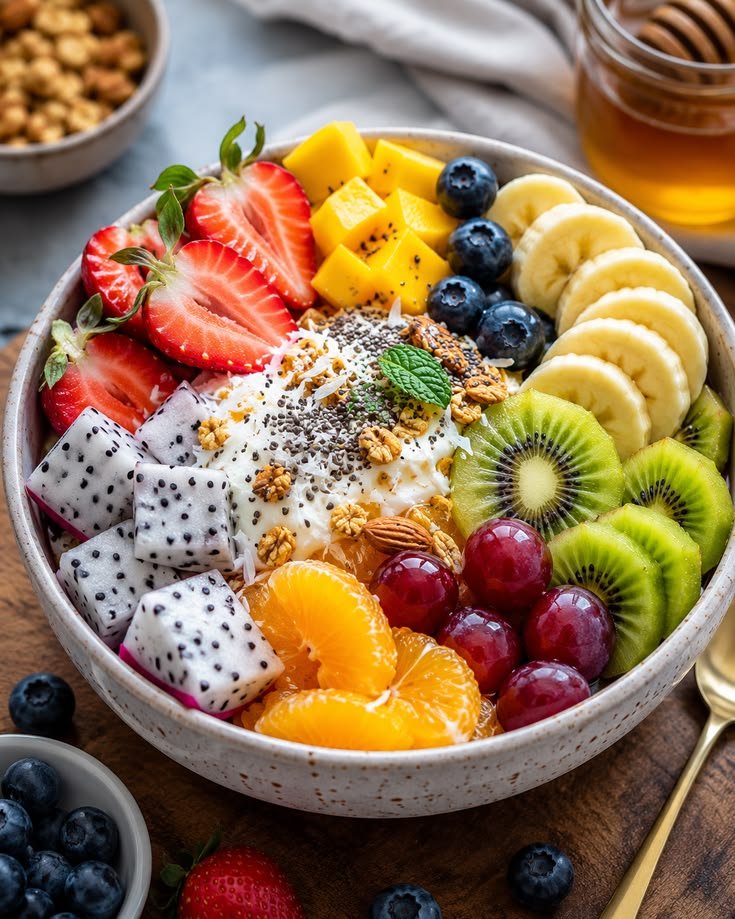
- Fruit and seed smoothie bowl: Blend banana, berries, and curd, then top with pumpkin seeds, flaxseeds, and a drizzle of honey.
- Warm baked apples: Bake apple halves with cinnamon and a spoon of honey for a comforting dessert.
- Fresh fruit chaat: Toss seasonal fruit with a squeeze of lemon, a pinch of black salt, and chaat masala.
- Fruit-infused water: Add slices of orange, cucumber, and mint to a jug of water for a refreshing, sugar-free drink.
- Overnight oats: Layer oats, curd, and chopped fruit in a jar and refrigerate overnight.
How Much Fruit Should You Eat Daily?
Most nutrition guidelines suggest around two servings of fruit a day for adults, where a serving is roughly one medium fruit or a small bowl of chopped fruit. Aim for variety across colours and choose whole fruit more often than juice, since juicing removes much of the fibre. People with diabetes or other health conditions should check with their doctor or dietitian about the right quantities and types of fruit for them.
How to Choose, Store and Wash Fresh Organic Fruits
Buying well and handling fruit properly helps you enjoy every bit of its freshness and nutrition.
How to Pick the Best Organic Fruits
- Go seasonal: In-season fruit is fresher, tastier, and usually more affordable.
- Check certification: Look for recognised organic labels and traceable sourcing.
- Use your senses: Choose fruit that feels heavy for its size, has a natural fragrance, and shows no mould or deep bruising.
- Don’t expect perfection: Organic fruit may have small blemishes or uneven shapes. That is a sign of natural growth, not poor quality.
Storing Organic Fruits to Keep Them Fresh Longer
Because organic fruit is not treated with artificial preservatives or waxes, it is best enjoyed fresh. Store berries, grapes, and cut fruit in the refrigerator. Keep bananas, mangoes, and papayas at room temperature until ripe, then refrigerate to slow further ripening. Keep ethylene-producing fruits like bananas and apples away from delicate produce, as they can make nearby fruit spoil faster.
Washing Organic Fruits the Right Way
Even organic fruit travels through many hands, so always wash it. Rinse under clean running water and rub gently with your fingers. For firmer fruit like apples and pears, a soft brush helps. Dry with a clean cloth before eating or storing. There is no need for harsh soaps or chemical washes.
Why Naturvia Organics Is a Trusted Source for Organic Fruits
At Naturvia Organics, we believe good food begins with honest sourcing. We work with farmers who follow natural, chemical-free practices, and we focus on delivering pure, wholesome products to your doorstep with care. Alongside fresh produce, you can explore our range of organic honey, pulses, and seed-based products to build a complete, nutrient-rich pantry. Browse our [INTERNAL LINK: anchor text “organic fruits and vegetables” → Naturvia Organics fruits & vegetables category page] to find seasonal, farm-fresh picks for your family.
Frequently Asked Questions About Organic Fruits
Are organic fruits really healthier than regular fruits?
Both are nutritious, and eating fruit daily matters most. Organic fruit offers lower exposure to synthetic pesticide residues, and some studies suggest higher levels of certain antioxidants. It is also grown in a way that is kinder to soil and the environment. For many families, that combination makes organic the preferred choice.
Which organic fruits are best to eat every day?
The best fruit is the one you will enjoy regularly and that is in season. Bananas, apples, papayas, guavas, oranges, pomegranates, and seasonal berries are all excellent everyday choices. Aim for a mix of colours across the week to cover a wide range of nutrients.
Do organic fruits need to be washed before eating?
Yes. Always rinse fruit under clean running water before eating or cutting it, even when it is organic. This removes dust, soil, and surface bacteria picked up during harvesting, transport, and handling.
Start Your Organic Journey with Naturvia Organics
Small, consistent choices create big changes in how we feel. A bowl of fresh, pure fruit each day is one of the simplest ways to support your digestion, immunity, heart, and energy, and choosing organic adds peace of mind about what is on your plate. Explore the Naturvia Organics collection today and discover wholesome, trusted, farm-fresh products for your family’s everyday wellness.