Top Health Benefits of Eating Pulses Every Day
Walk into any Indian kitchen and you will almost always find a steel container of dal sitting close to the stove. It is the quiet hero of our meals: simple, comforting and deeply nourishing. But have you ever stopped to think about how much goodness sits inside that humble bowl? Modern nutrition science has plenty to say, and most of it is wonderfully positive. Making pulses a part of your daily plate is one of the easiest, most affordable and most delicious habits you can build for long-term wellbeing.
At Naturvia Organics, we believe that good health begins with pure, natural and chemical-free food. In this detailed guide, we explore the proven health benefits of pulses. We explain what makes them so nutrient-rich, show how they support your heart, blood sugar, digestion and weight, and share practical ideas to enjoy them without ever getting bored. Whether you are a lifelong dal lover or someone just beginning to eat more plant-based meals, read on and see your everyday dal in a whole new light.
So grab a cup of chai, settle in, and let us walk through why this ancient, wholesome food deserves a permanent spot in your daily routine.
What Are Pulses and Why Do They Deserve a Place on Your Plate?
Pulses are the dry, edible seeds of plants that belong to the legume family. They grow inside pods and include lentils, dried peas, chickpeas and a wide variety of beans. In India we know them by familiar names: toor dal, moong, masoor, chana, urad, rajma and lobia. For thousands of years, these humble seeds have formed the backbone of vegetarian nutrition across the subcontinent, and they continue to feed billions of people around the world today.
The importance of this food group was recognised globally when the United Nations declared 2016 the International Year of Pulses, highlighting their role in nutrition, food security and sustainable farming.
Unlike fresh vegetables, these seeds are allowed to mature fully on the plant and are then dried. This gives them a long shelf life and a remarkably dense concentration of nutrients. A single cup of cooked dal can supply a meaningful share of your daily protein, fibre, folate, iron, magnesium and potassium, with very little fat and no cholesterol at all. That combination is rare in the food world, which is why nutritionists keep recommending that we eat them regularly.
It is also worth remembering that this is food your grandparents trusted. Long before protein shakes and supplements became fashionable, a simple plate of dal, rice, a seasonal sabzi and a spoon of ghee kept families strong and energetic. Modern research is now confirming what traditional kitchens always knew.
Common Types of Pulses in Indian Kitchens
India is blessed with an incredible variety of dals and legumes. Each one has its own taste, texture and cooking style:
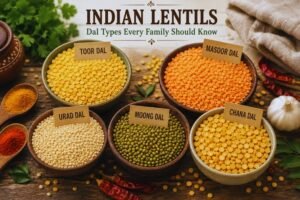
- Toor (arhar) dal: Mild, slightly nutty and the base of everyday sambar and dal tadka. It is a good source of protein and folate.
- Moong dal: Light and easy to digest, which is why it is often recommended during recovery or when the stomach feels sensitive. It cooks quickly and works in soups, khichdi and chilla.
- Masoor dal: Red lentils that cook in minutes and turn creamy. They are a handy source of iron and a favourite for quick weeknight meals.
- Chana dal: Split Bengal gram with a sweet, earthy flavour and a lower glycaemic response, making it a smart choice for steady energy.
- Urad dal: Rich and velvety, used in dal makhani, idli and dosa batter. It is valued for its protein and mineral content.
- Rajma (kidney beans): Hearty and satisfying, loaded with fibre and potassium.
- Kabuli and kala chana: Chickpeas that are perfect for chole, salads, sprouts and roasted snacks.
- Lobia (black-eyed peas): Soft, quick-cooking beans with a lovely texture and plenty of folate.
Rotating between these varieties through the week keeps your meals interesting and gives your body a broader range of nutrients.
Powerful Nutritional Benefits of Eating Pulses Every Day
Few foods deliver as much nutrition per rupee as pulses do. They sit at the happy meeting point of affordability, taste, shelf life and health, and that is why they appear in nearly every healthy eating pattern recommended around the world, from the traditional Indian thali to the Mediterranean diet.
Let us look closely at what is actually inside that bowl.
Plant Protein and Fibre: Why Pulses Are a True Powerhouse
Protein is the first thing most people associate with this food group, and rightly so. Depending on the variety, 100 grams of dry dal or legumes provides roughly 20 to 25 grams of protein, which is far higher than most grains and vegetables. For vegetarians, this makes dal one of the most practical everyday protein sources available. It supports muscle repair, healthy hair and skin, hormone production and a strong immune system.
There is a clever nutritional partnership at work too. Dals are rich in lysine, an amino acid that cereals tend to lack, while cereals provide methionine, which dals tend to lack. This is why the classic combination of dal with rice or roti works so well. Together they supply a more complete amino acid profile. Our ancestors figured out this pairing without a single laboratory test.
Fibre is the second star. Both soluble and insoluble fibre are present in good amounts. Insoluble fibre keeps digestion moving and helps prevent constipation, while soluble fibre forms a gentle gel in the gut that slows the absorption of sugar and fat. Because pulses are digested slowly, they keep you feeling full for hours and help you avoid the sudden energy crashes that follow refined, sugary snacks.
Vitamins and minerals in every bowl. Including pulses regularly can help fill some of the most common nutrient gaps in Indian diets. Folate (vitamin B9) is essential for healthy cell growth and especially important during pregnancy, and it is abundant in lentils and chickpeas. Iron supports healthy blood and oxygen transport, and dals are a valuable plant source, particularly for vegetarians and women. Magnesium supports muscles, nerves and restful sleep. Potassium helps regulate blood pressure. Zinc supports immunity and skin health, and B vitamins help your body convert food into usable energy.
A simple tip from traditional kitchens: finish your bowl of dal with a squeeze of fresh lemon. The vitamin C improves the absorption of plant-based iron, so you get even more from every spoonful.
Naturally low in fat and free from cholesterol. Dals and legumes contain very little fat and no cholesterol, which makes them a lighter alternative to many heavy protein sources. When you cook them with minimal oil and plenty of vegetables, spices and herbs, you get a meal that is both satisfying and gentle on the body.
Antioxidants and plant compounds. Beyond the headline nutrients, these seeds carry polyphenols and other plant compounds that help the body fight oxidative stress. Darker varieties such as black chana, rajma and whole urad tend to be especially rich in them, which is one more reason to eat a colourful variety through the week.
How Daily Pulses Support Heart, Blood Sugar and Weight
Beyond basic nutrition, regular consumption of dals and legumes is linked with some of the health outcomes people care about most today: a healthy heart, steady blood sugar, a comfortable weight and a happy gut. Here is how each one works.
Heart Health and Blood Sugar Control with Pulses
A heart-friendly choice. Soluble fibre binds with cholesterol-rich bile in the digestive system and helps the body remove it rather than reabsorb it . Many research reviews suggest that people who eat more pulses tend to have lower LDL (“bad”) cholesterol, which is a major risk factor for heart disease. Potassium and magnesium support healthy blood pressure, while the very low saturated fat content keeps the overall eating pattern heart-friendly.
Steadier blood sugar. Dals and legumes have a low glycaemic index, which means their carbohydrates break down slowly and enter the bloodstream gradually instead of in a sudden spike. The combination of protein, fibre and slow-digesting starch helps you avoid the rollercoaster of highs and lows that leaves you tired and hungry soon after eating. This is why many dietitians suggest replacing part of the white rice or refined flour on your plate with dal or chana. If you are managing diabetes or pre-diabetes, speak with your doctor or a registered dietitian about the portions that suit you best.
Weight management and fullness. Protein and fibre are the two nutrients that keep hunger quiet. A bowl of dal at lunch can keep you full right through the afternoon, which makes it easier to avoid unplanned snacking on biscuits and fried foods. Because these foods are filling yet relatively low in calories for their volume, they fit naturally into a balanced weight management plan without any need for strict dieting.
A happier gut. The fibre and resistant starch in dals and legumes act as food for the beneficial bacteria in your intestines. A healthy gut microbiome is increasingly linked with better digestion, stronger immunity and even improved mood. If you are new to eating more legumes, start with smaller portions and increase gradually so your digestive system can adjust comfortably.
Steady energy through the day. The complex carbohydrates in dals release energy slowly. Instead of a quick burst followed by a slump, you get sustained fuel for work, study, workouts and play. This is one reason dal-based meals have powered farmers, students and workers across India for generations.
Good for the planet too. Legume plants have a special ability to capture nitrogen from the air and return it to the soil, which reduces the need for chemical fertilisers. They also use relatively little water compared with many other protein sources. Choosing organically grown dals supports farmers who care for the soil and keeps your plate free from unnecessary chemical residues.
Smart Ways to Cook and Enjoy Pulses Every Day
Knowing the benefits is only half the story. The real magic happens when pulses become a regular, enjoyable part of your cooking rather than a once-in-a-while dish. The good news is that eating them daily is easier than it sounds.
Soak, rinse and cook the right way. Rinse your dals and legumes under running water until it runs clear. Larger beans such as rajma and chickpeas benefit from soaking for 6 to 8 hours or overnight, which shortens cooking time and makes them easier to digest. Discard the soaking water, add fresh water and cook until soft. Smaller dals like moong and masoor need little or no soaking. Adding a pinch of turmeric, a piece of ginger or a little hing (asafoetida) while cooking not only improves flavour but also makes the dish gentler on the stomach.
Easy ideas for every meal. Here is how you can fit pulses into your day without any fuss:
- Breakfast: Moong dal chilla, besan cheela, sprouted moong salad, or a bowl of warm upma with added lentils.
- Lunch: A classic dal tadka with brown rice or roti and a side of vegetables, or a rajma bowl with cucumber raita.
- Evening snack: Roasted chana with a sprinkle of chaat masala, or a chickpea and onion salad with lemon.
- Dinner: Light khichdi, masoor dal soup, lobia curry, or a vegetable and dal stew.
- Smart swaps: Add boiled lentils to parathas, blend cooked chickpeas into hummus, or stir a spoonful of cooked dal into soups and gravies for extra body and protein.
Keep portions sensible. For most healthy adults, around one cup of cooked dal or legumes a day is a good target, spread across meals. Pair it with vegetables, whole grains and a source of vitamin C for the best nutritional balance.
Choose pure, farm-fresh quality. The quality of the pulses you buy makes a real difference to taste, cooking time and nutrition. Look for evenly sized, clean grains with a natural colour and no musty smell. Organically grown dals are cultivated without synthetic pesticides, so what reaches your pot is as natural and wholesome as nature intended. At Naturvia Organics, we source chemical-free, farm-fresh dals and lentils and pack them with care so they reach your kitchen with their goodness intact. You can explore the full range here: [INTERNAL LINK: add the link on the words “chemical-free, farm-fresh dals and lentils” → Naturvia Organics Pulses & Dals category page].
Store them well. Keep your dals in clean, airtight containers in a cool, dry place away from direct sunlight and moisture. Stored properly, they stay fresh for months and are always ready for a quick, healthy meal.
FAQs About Eating Pulses Every Day
How Much Pulses Should I Eat Per Day?
For most healthy adults, about one cup of cooked dal, lentils, chickpeas or beans per day is a sensible amount. This can be split across lunch and dinner, or combined with sprouts and snacks. If you are new to legumes, begin with half a cup and increase gradually so your digestion can adapt. People with specific medical conditions, such as kidney problems, should check the right portion size with their doctor.
Are Pulses Safe to Eat Every Day?
Yes, for most healthy people, eating pulses daily is safe and beneficial, as long as they are soaked and cooked properly. Cooking removes natural compounds that can cause discomfort and makes the nutrients easier to absorb. Rotating between different dals and legumes through the week also keeps your diet varied. If you notice bloating, introduce them slowly, chew well and add digestive spices such as cumin, ajwain or ginger.
Bring Wholesome Goodness to Your Daily Plate
A bowl of dal may look simple, but it carries protein, fibre, minerals and generations of trust. When you choose pure, natural and farm-fresh pulses, you give your family a nutrient-rich foundation for every meal. Explore the Naturvia Organics range of chemical-free dals, lentils, honey, fruits and vegetables, and discover how delicious everyday healthy eating can be. Your next wholesome meal is only a click away.